
Temporary Fencing And Scaffold Support: Why It Matters
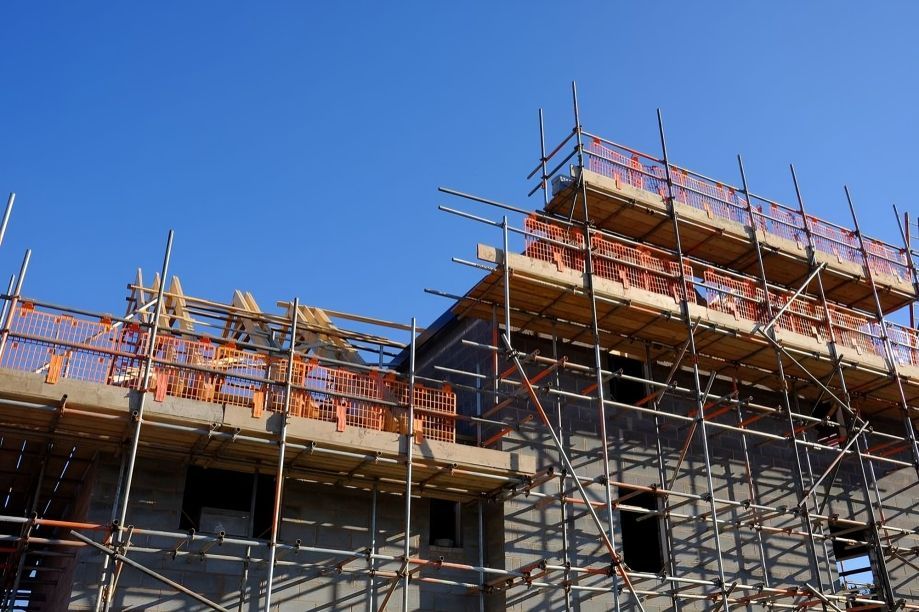
A scaffold is only as secure as the perimeter around it. Once a structure goes up on a Coffs Harbour site, whether it's a residential renovation on a quiet street or a larger commercial build fronting a busy footpath, the fencing that surrounds it becomes just as important to the project's safety as the scaffold itself. Here's why temporary fencing in Coffs Harbour deserves genuine attention, not an afterthought, once scaffolding is on site.
Establishing Exclusion Zones Around the Scaffold Base
Every scaffolded site carries a real risk of falling objects, tools, materials, offcuts, and even small debris dislodged during work at height. Under SafeWork NSW's approach to managing this risk, a PCBU is expected to eliminate the risk where possible, and where that's not achievable, minimise it through measures like properly enclosed platforms and clearly defined exclusion zones.
In practice, this means the area directly beneath and around a scaffold's working zones, particularly beneath drop zones where materials are being lifted or lowered, needs a physical barrier keeping people out, not just a verbal warning or a sign. Temporary fencing does this job precisely, creating a defined pedestrian exclusion zone that removes the guesswork about where it's safe to walk near an active structure.
Keeping the Public and Unauthorised Visitors Off an Active Site
Beyond falling objects, an active construction site carries a long list of other hazards, open trenches, exposed wiring, uneven ground, machinery, that the public simply shouldn't be walking through, whether deliberately or by accident. This matters even more in areas near schools, homes, playgrounds or other public spaces, where the likelihood of someone wandering onto a site unintentionally, particularly children, is genuinely higher.
A properly installed fence line should have no gaps, no missing panels, and should join cleanly with any existing structures or fencing already on the boundary. Shrubs or trees are never an acceptable substitute for a real fence line, and the gap underneath needs to be minimal, since even a small gap can be enough for a child to get through. This isn't just good practice, it's the standard SafeWork NSW expects a properly secured construction site to meet.
Protecting the Scaffold Itself: Tampering, Climbing and Vehicle Impact
Scaffolding in Coffs Harbour is a significant structural investment sitting exposed, often around the clock, until the job's finished. Fencing protects that investment in two distinct ways.
Deterring climbing and tampering. Fencing needs to be constructed to prevent footholds and deter climbing, which is why standard temporary fencing mesh shouldn't exceed 75mm in width under AS4687. Anti-climb mesh, with narrower openings specifically designed to resist footholds, is worth considering for higher-risk sites, particularly where the fence line sits close to public access or in areas with a known history of unauthorised access attempts. It's also worth checking that nothing, pallets, stacked materials, bins, is left sitting adjacent to the fence line, since anything that can be used as a step effectively defeats the fence's purpose.
Protecting against accidental vehicle impact. Where a site fronts a road, driveway or car park, particularly after hours when there's less activity and awareness on site, the scaffold and its fencing need to be positioned and, where necessary, reinforced to withstand an accidental vehicle strike. This is a real consideration for any site with vehicle access nearby, not just a theoretical risk.
How Secured Fencing Supports PCBU Duty-of-Care Obligations
Under the Work Health and Safety Act, the person conducting the business or undertaking carries an ongoing duty to manage risks on their site, and that duty doesn't stop once the scaffold is erected and the crew goes home for the day. A secured, well-maintained perimeter is a core part of demonstrating that this duty is being met, both for workers during active hours and for the public outside them.
SafeWork NSW guidance is specific here: site fencing should be regularly checked to confirm it remains secure, mesh and shade cloth ties should be properly fixed to withstand wind, and any damage or movement should be addressed promptly rather than left until the next scheduled visit. Treating fence security as a one-off installation, rather than something checked throughout the life of the project, is one of the more common gaps we see on sites that later run into compliance issues.
Where Fencing Should Sit Relative to the Scaffold
Positioning matters as much as the fence itself. Fencing generally needs to sit far enough from the scaffold structure to create a genuine buffer zone, rather than running immediately alongside it with no real separation, particularly beneath any area where materials are being lifted, moved, or stored at height.
What Changes When a Site Fronts a Footpath or Shared Driveway in Coffs Harbour
Sites bordering a public footpath or a shared driveway carry additional obligations most homeowners and even some builders don't anticipate. Placing scaffolding, hoarding or fencing on or over a public footpath in NSW typically requires council approval, and where scaffolding can't be set back a reasonable distance from the kerb, additional barriers may be required specifically to protect the structure from vehicle impact.
Alternative pedestrian access also needs to be properly provided where a footpath is partially or fully blocked, rather than simply forcing pedestrians onto the road. For sites in Coffs Harbour fronting a footpath or shared driveway, it's worth confirming these requirements with council and your scaffold provider early in the project, since retrofitting compliant fencing after the fact costs more time and money than getting it right from the start.
Get Your Site Properly Secured
If you're setting up a scaffolded site in Coffs Harbour and want fencing that genuinely does its job, exclusion zones that hold, a perimeter the public can't wander into, and protection for the structure itself, it's worth having it assessed by a team who deals with this daily. As a trusted provider of scaffolding in Coffs Harbour, our team, which includes a certified workplace health and safety officer, can assess your specific site and recommend the right fencing configuration for your project.
If you're weighing up whether to source scaffolding and fencing separately or through one provider, we've covered that decision in more detail in bundling scaffolding, fencing and crane hire under one supplier. Get in touch to arrange temporary fencing hire for your next Coffs Harbour project.